DAVID H. REED
Assistant Professor of Biology
Department of Biology
The University of Mississippi
University, MS 38677
TEL: (662) 915-6647
FAX: (662) 915-5144
Email: dreed@olemiss.edu
EDUCATION:
Ph.D. 1998. University of Houston, Ecology and Evolution
B.B.A. 1988. Lincoln Memorial University, Economics and Statistics.
PROFESSIONAL EXPERIENCE
Assistant Professor -- The University of Mississippi (2002 - present)
Visiting Assistant Professor -- Southwest Missouri State University (2001 - 2002)
Postdoctoral Fellow -- Macquarie University, Sydney, Australia (1999 - 2001)
Lecturer -- Chandler-Gilbert Community College, Phoenix Arizona (1998 - 1999)
RESEARCH ACTIVITIES:
Conservation Biology, Population / Quantitative Genetics, Evolutionary Biology and Population Ecology.
I study extinction. Most previous work on extinction has focused on only one or two extinction forces at a time. However, in the real world, demographic, deterministic, ecological, evolutionary, and genetic factors operate simultaneously and synergistically. I attempt to understand these factors, and their interactions, using a combination of computer simulations, field work, and laboratory experiments.
My current research involves two major foci:
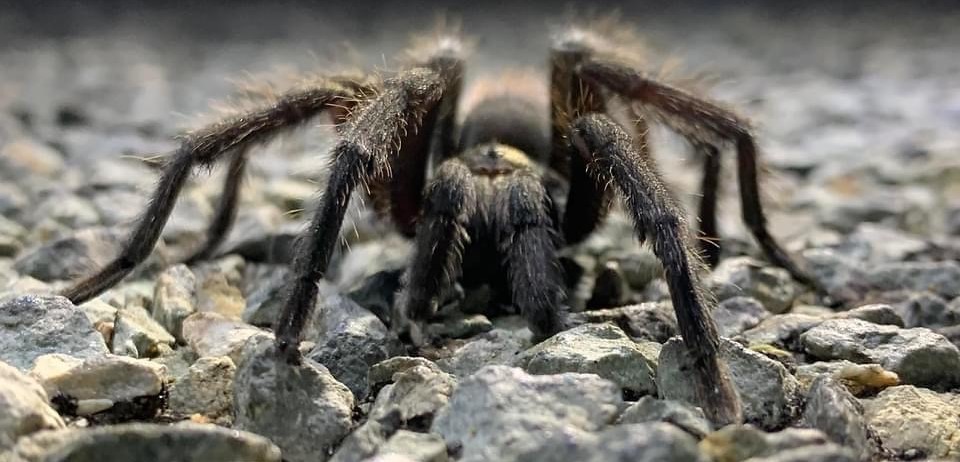
(1) Field research using wolf spiders of the genus Rabidosa as a model organism (in collaboration with Dr. Gail Stratton, University of Mississippi). Habitat for these spiders in northern Mississippi is patchy and populations are often isolated from each other. I am currently concentrating on how environmental and genetic factors interact to determine the population dynamics of two species of wolf spider and how these dynamics impact the probability of extinction. However, my students and I are investigating numerous questions concerning intraspecific competition and density dependent mortality, the effect of population size on population fitness and genetic diversity, niche overlap and the evolution of realized niche in wolf spiders, gene flow among local populations of Rabidosa rabida, prey preferences and growth rates of wolf spiders, temporal and spatial variation in life history, the evolution of life history traits, the evolution of mating behaviors, density independent mortality, and spatial and temporal correlation in fluctuations in population size.
(2)Computer simulations, simple analytical models and population viability analysis (PVA). My colleagues and I have been among the leaders in looking at how genetic factors influence the probability of extinction. I am especially interested in the interactions between genetics and other factors impacting extinction risk and working on ways to improve the PVA process. Additionally, I am currently interested in modeling a number of phenomena concerning evolutionary processes or factors affecting population dynamics.
In addition to my research, I am very involved in the Conservation Breeding Specialist Group (IUCN; Species Survival Commission). I participate in modeling and facilitation during Population and Habitat Viability Analysis (PHVA) workshops, especially for species in Asia. I was recently the lead modeler for modeler for the Asian golden cat (Catopuma temmincki) PHVA (in Thailand) and will be the lead modeler in the upcoming conservation plans for the Tsushima leopard cat and Okinawa rail (Japan) .
POSSIBLE RESEARCH PROJECTS FOR STUDENTS IN MY LAB:
(1) I am collaborating with Dr. Gail Stratton on a number of projects involving populations of wolf spiders. Almost any project with application to conservation or population biology could be entertained.
(4) Stochastic Population Ecology: large data set available to pursue a number of questions
relating to population regulation and variability
TEACHING:
Biometry (BISC 504), Conservation Biology (BISC 515), Genetics (BISC 336),
Population Genetics(BISC 514), Population Biology (BISC 616).
RECENT PUBLICATIONS:
Burket TV, Reed DH (2006). The effects of habitat fragmentation on extinction risk: Mechanisms and synthesis. Songklanakarin Journal of Science and Technology, in press.
Armbruster P, Reed DH (2005) Inbreeding depression in benign versus stressful environments: A meta-analysis. Heredity 95: 235-242.
Heering T, Reed DH. (2005) Predicting extinction: Density-dependent changes in the variance of population growth rates. Journal of the Mississippi Academy of Sciences 50: 183-194.
Reed DH (2005) Relationship between population size and fitness. Conservation Biology 19: 560-568.
Traylor-Holzer K, Reed DH (2005) Asiatic Golden Cat in Thailand Population and Habitat Viability Assessment. IUCN/SSC Conservation Breeding Specialist Group, Apple Valley, MN.
Traylor-Holzer K, Lacy R, Reed DH, Byers O (2005) Alabama Beach Mouse Population and Habitat Viability Assessment. IUCN/SSC Conservation Breeding Specialist Group, Apple Valley, MN.
Manansang J, Traylor-Holzer K, Reed DH, Leus K (2005). Indonesian Proboscis Monkey Population and Habitat Viability Assessment. IUCN/SSC Conservation Breeding Specialist Group, Apple Valley, MN
Chao J-T, Tsao EH, Traylor-Holzer K, Reed DH, Leus K (2005) Formosan Pangolin Population and Habitat Viability Assessment. IUCN/SSC Conservation Breeding Specialist Group, Apple Valley, MN.
Reed DH, O'Grady JJ, Brook BW, Ballou JD, Frankham R (2004) Reality checks, probability statements, and the case of the Bali tiger. Conservation Biology 18: 1179.
Reed DH, Bryant EH. (2004) Phenotypic correlations among fitness components and total fitness. Journal of Evolutionary Biology 17: 919-923.
Reed DH (2004) Extinction risk in fragmented habitats. Animal Conservation 7: 181-191.
O'Grady JJ, Reed, DH, Brook BW, Frankham R. (2004) What are the best correlates of extinction risk? Biological Conservation 118: 513-520.Reed DH, Hobbs GR (2004) The relationship between population size and temporal variability in population size. Animal Conservation 7: 1-8.
Reed DH, Lowe EH, Briscoe DA, Frankham R. (2003) Fitness and adaptability in a novel environment: effect of prior environment, inbreeding, and lineage. Evolution 57: 1822 - 1828.
Reed DH,, Lowe EH, Briscoe DA, Frankham R. (2003) Inbreeding and extinction: Effects of rate of inbreeding. Conservation Genetics 4: 405-410.
Reed DH, O'Grady JJ, Ballou JD, Frankham R. (2003) The frequency and severity of catastrophic die-offs in vertebrates. Animal Conservation 6: 109-114.
Reed DH, O'Grady JJ, Brook BW, Ballou JD, Frankham R. (2003) Estimates of minimum viable population sizes for vertebrates and factors influencing those estimates. Biological Conservation 113: 23 - 34.
Reed DH, Frankham R. (2003) Correlation between population fitness and genetic diversity. Conservation Biology 17: 230 - 237.
Reed DH, Briscoe DA, and Frankham R. (2002) Inbreeding and extinction: The effect of environmental stress and lineage. Conservation Genetics 3: 301-307.
Reed DH and Frankham R. (2001) How closely correlated are molecular and quantitative measures of genetic variation? A meta-analysis. Evolution 55: 1095-1103.
Reed DH and Bryant EH. (2001) Genetic load, fitness, and their relationship to purging in experimental populations of the housefly. Conservation Genetics 2: 57-61.
Reed DH and Bryant EH. (2001) Relative effects of mutation accumulation versus inbreeding depression on fitness in experimental populations of the housefly. Zoo Biology 20: 145-156.
Reed DH and Bryant EH. (2000) Experimental tests of minimum viable population size. Animal Conservation 3: 7-14.
Reed DH and Bryant EH. (2000) The evolution of senescence under curtailed life span in laboratory populations of Musca domestica (the housefly). Heredity 85: 115-121.
Bryant EH, Backus VL, Clark ME and Reed DH. (1999) Experimental tests of captive breeding programs for endangered species. Conservation Biology 13: 1487-1496.
Bryant EH and Reed DH. (1999) Fitness decline under relaxed selection in captive populations. Conservation Biology 13: 665-669.