


James Cizdziel
Assistant Professor
|
Contact Information
Office: 333 Coulter Hall
Phone: 662-915-1814
Email: cizdziel AT olemiss.edu
Educational and Professional Background
BS, State University of New York at Buffalo, 1991 Ph.D., University of Nevada Reno, 1998 National Research Council Postdoctoral Fellow, U.S. Environmental Protection Agency, National Exposure Research Laboratory, 1998-2000
Senior Chemist, Harry Reid Center for Environmental Studies, University of Nevada Las Vegas, 2000-2005
Associate Research Professor, Harry Reid Center, UNLV, 2005-2008
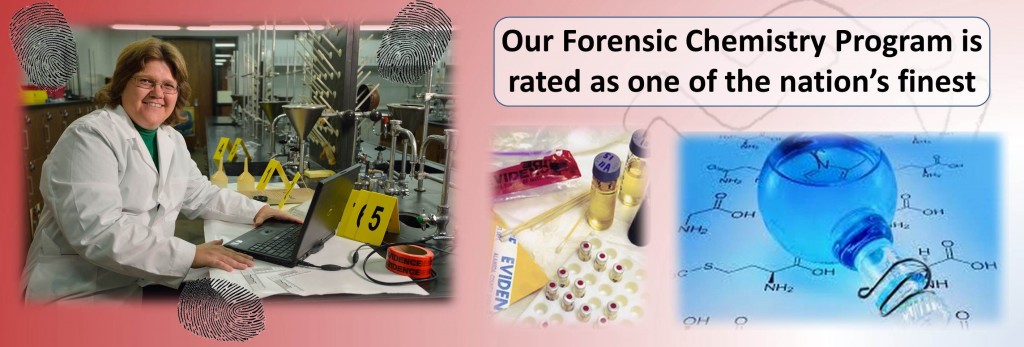
Research Interests: Analytical chemistry, environmental chemistry, forensic chemistry, biogeochemical cycling of mercury, environmental radioactivity, environmental monitoring and fingerprinting, analytical method development |
Research Summary
My research interests are in the area of analytical, environmental, and forensic chemistry. I am particularly interested in environmental monitoring and fingerprinting using isotope based methods. What counts in science is novelty. To that end, we enjoy developing new measurement techniques or applying standard techniques in novel ways. Listed below are some examples of the type of research that you may pursue if you were to join my group. I would welcome the opportunity to discuss these and other research possibilities with you as you decide whether to pursue graduate education in chemistry at Ole Miss.
Trace Elemental Analysis. I am interested in studying the behavior of trace elements (both stable and radioactive) in the environment. This sometimes involves developing novel analytical methods for measurement of the element or forms of the element (speciation). One of the methods we employ involves direct elemental and isotopic analyses of environmental or biological samples using laser ablation inductively coupled plasma mass spectrometry (LA-ICP-MS). This allows us to map the elemental distribution in, for example, tree rings, thin sections of brain tissue, glass shards, paint chips, fish otiliths, leaves, etc. Current research projects in this area include in-situ elemental analysis of leaves, herbal supplements, and biological shells, and the analysis of human hair and animal fur for metals. Future work may include environmental fate and transformation of nanoparticles, and evaluating metal redistribution in soils and biological uptake resulting from invertebrate burrowing, among others.
Mercury. Mercury (Hg) has probably the most complex biogeochemical cycle among the elements. Because of its tendency to bioconcentrate in food chains in the form of methyl-Hg and cause detrimental human health and ecological effects, it continues to be a hot button issue and a priority pollutant. Indeed, Hg is responsible for the most fish consumption advisories in the nation due to elevated Hg levels in fish flesh. This includes reservoirs in northern Mississippi nearby our campus. Current research projects in this area include the distribution and cycling of Hg in the Yocona River Watershed and development of a combustion-CVAFS system for Hg analyses. Future research projects may include, addressing spatial and dry deposition data gaps in Hg cycling chemistry models, evaluating Hg release characteristics from compact fluorescent lamps, environmental forensic investigations of Hg using high precision isotope measurements, and using mosquitoes as bio-indicators methyl-Hg accumulation in food webs, among others.
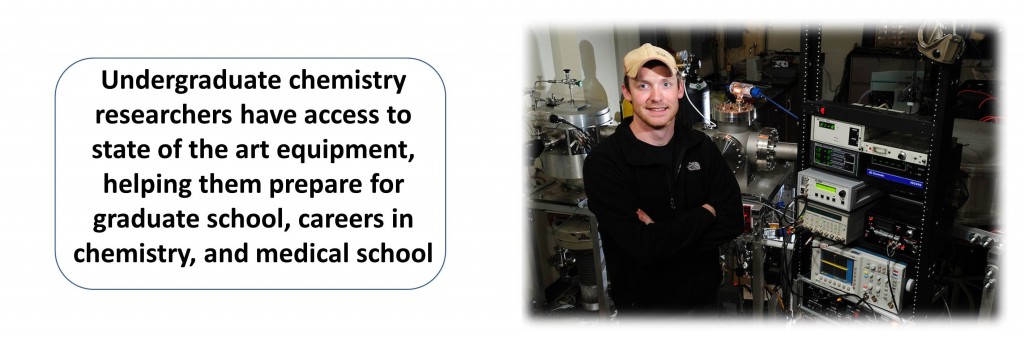
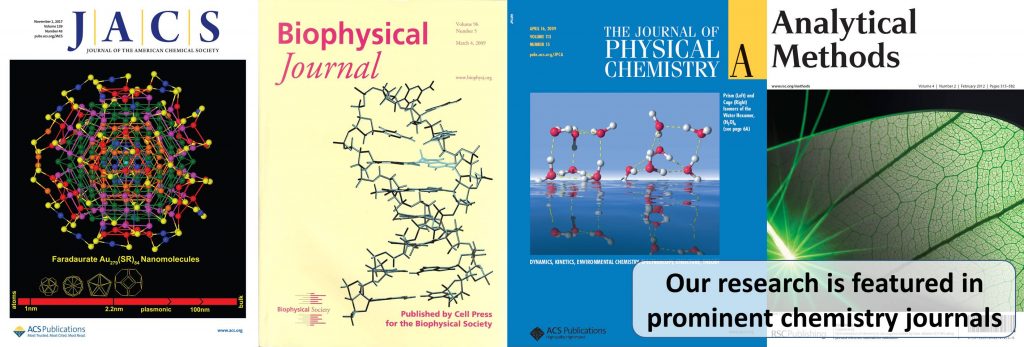
From the above examples and the select publications listed below you can get a sense of the type of research my group conducts. The studies often include a combination of method development and field experiments that serve to provide much needed quality data to address current hype on an issue or to increase understanding of natural phenomena. My experience and expertise in environmental and analytical chemistry offers opportunities for students to apply chemical principles to understand environmental problems, the first crucial step in solving them. Our research laboratory is well-equipped for trace elemental and isotopic analysis. It includes a high resolution ICP-MS (Nu AttoM), a laser ablation system (UP-213 New Wave), an inductively coupled plasma optical emission spectrometer (Perkin Elmer Optima 2100), a microwave digestion system (Milestone Ethos EZ), a cold vapor atomic fluorescence spectrometer (Tekran 2600), a direct mercury analyzer (DMA-80 Milestone) and clean-room facilities. We also have access to a variety of other instruments commonly found in Chemistry Departments such as ICP-MS, GC/MS, NMR, XRF, FT-IR, and IRMS.
Recent Publications
Cizdziel J., Guo C., Yu Z., Steinberg S., Johannesson, K. (2008) “Chemical and Colloidal Analyses of Natural Seep Water Collected from the Exploratory Studies Facility inside Yucca Mountain, USA”, Environmental Geochemistry and Health, 30:31-44.
Cizdziel J., Ketterer M.E, Farmer D., Faller S., Hodge V. (2008) “239Pu-240Pu-241Pu fingerprinting of plutonium in western US soils using ICPMS: solution and laser ablation measurements”, Special Issue: Stable Isotopes in Analytical Chemistry, Analytical and Bioanalytical Chemistry, 390:521-530.
James Cizdziel, Wei Y., Stetzenbach K., Hodge V., Cline J., Howley R., Phillips F. (2008) “Recent Measurements of Chlorine-36 in Yucca Mountain Rock, Soil, and Seepage” Journal of Radioanalytical and Nuclear Chemistry, 275: 133-144.
Panta Y., Qian S., Cizdziel J., Cross C. (2008) “Mercury content of whole cigarettes, cigars and chewing tobacco packets by pyrolysis atomic absorption spectrometry with gold amalgamation” Journal of Analytical and Applied Pyrolysis, 83:7-11.
Pollard J., Cizdziel J., Stave K., Reid M. (2007) “Selenium Concentrations in Water and Plant Tissues of a Newly Formed Arid Wetland in Las Vegas, Nevada”. Journal of Environmental Monitoring and Assessment, 135:447-457.
Cizdziel J. (2007) “Determination of lead in blood by laser ablation ICP-TOF-MS analysis of blood spotted and dried on filter paper: a feasibility study”, Analytical and Bioanalytical Chemistry, 388:603-611
Kimura H, Azmy K, Yamamuro M, Zhi-Wen J, Cizdziel J. (2005) “Integrated stratigraphy of the upper Neoproterozoic succession in Yunnan Province of South China: re-evaluation of global correlation and carbon cycle”, Precambrian Research 138:1-36.
Cizdziel J., Farmer D., Hodge V., Lindley K., Stetzenbach K. (2005) “234U/238U isotope ratios in springs and groundwater from southern Nevada: a comparison of alpha counting and magnetic sector ICP-MS”, Science of the Total Environment 350:248-260.
Cizdziel J., Zhou, X. (2005) “Sources and concentrations of Hg and Se in compartments within the Las Vegas Wash during a period of rapid change” Environ Monitoring & Assess 107:81-99.
Gremillion P., Cizdziel J. (2005) “Caudal fin mercury as a predictor of fish-muscle mercury”, Environ Chem. 2:96-99.
Cizdziel J. (2004) “Mercury concentrations in groundwater collected from wells on and near the Nevada Test Site”, Bulletin of Environ. Contamination and Toxicology 72:202-210.
Cizdziel J., Gerstenberger S. (2004) “Determination of total mercury in human hair and animal fur by combustion atomic absorption spectrometry” Talanta 64: 918-921.
Turner M., Rudin M., Cizdziel J., Hodge V. (2003) “Excess plutonium in soils near the Nevada Test Site, U.S.A.” Environ. Pollut. 125: 193-203.
Cizdziel J., Pollard J., Hinners T., Cross C. (2003) “Distribution of mercury in the tissues of five species of freshwater fish from Lake Mead, U.S.A.”, Journal of Environ. Monitor. 5:1-8.
Cizdziel J., Hinners T. Heithmar E. (2002) “Determination of total Hg in fish tissues using combustion atomic absorption spectrometry with gold amalgamation”, Water Air Soil Pollut. 135: 357-372.
Cizdziel J., Pollard J., Hinners T., Heithmar E., Cross C. (2002) “Mercury concentrations in fish from Lake Mead related to fish size, condition, trophic level, location and consumption risk”, Archives of Environ.Contamination and Toxicol. 43: 309-317.
Cizdziel J., Hodge V. (2000) “Attics as archives for house infiltrating pollutants: trace elements and pesticides in attic dust and soil from southern Nevada and Utah,” Microchemical J., 64, 85-92.
Cizdziel J., Hodge V., Faller S. (1999). “Resolving Nevada Test Site and global fallout plutonium using 137Cs/239+240Pu activity ratios,” Health Physics, Vol. 77, No. 1, 67-75.
Cizdziel J., Hodge V., Faller S. (1998). “Plutonium anomalies in attic dust and soil at locations surrounding the Nevada Test Site,” Chemosphere, Vol. 37, No. 6, 1157-1168.
|