Porter L. Fortune, Jr.
34th Annual History Symposium

February 18-20, 2010

"The Civil Rights Movement
in Mississippi"

http://www.olemiss.edu/depts/history/symposium/Events_Symposium_current.htm

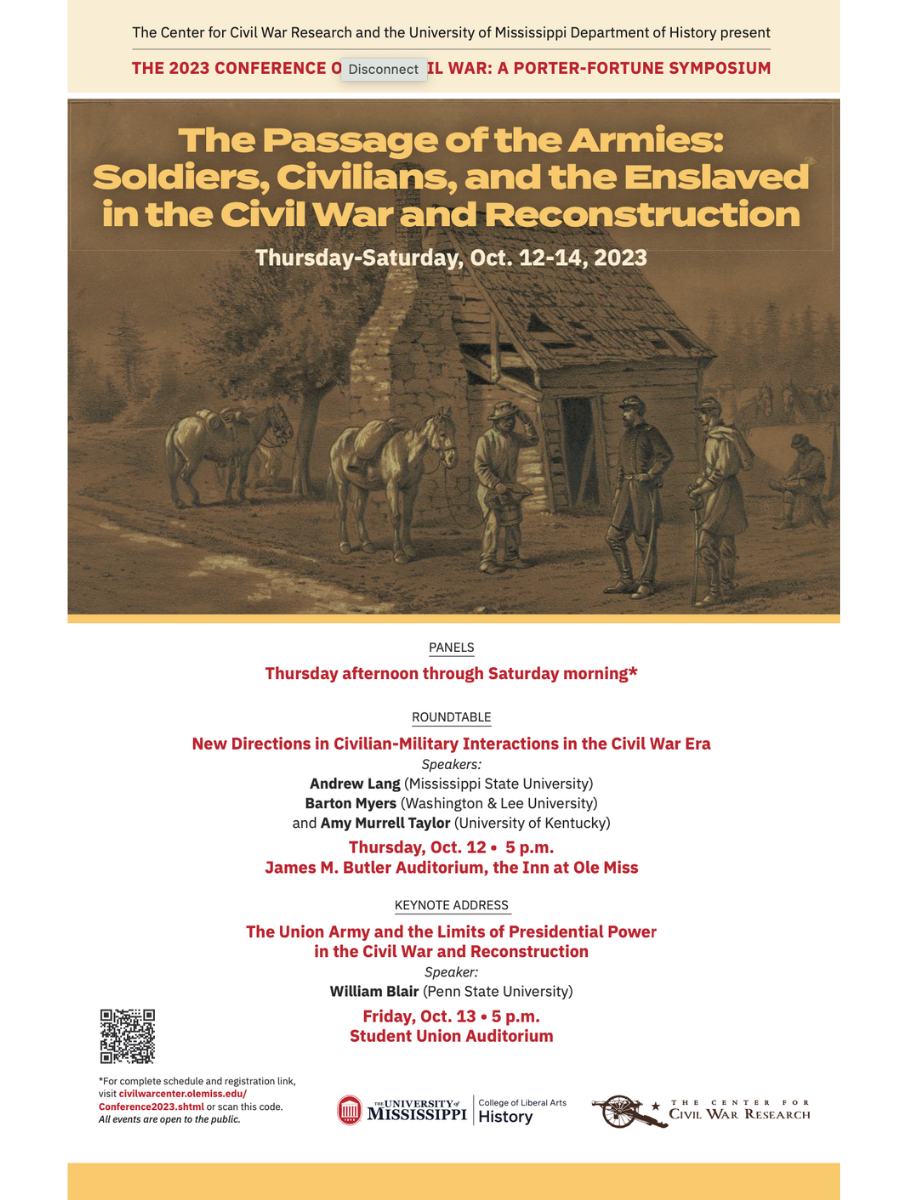
Conference on the Civil War

October 30 and 31, 2009

http://www.civilwarcenter.olemiss.edu/

Congratulations - Sheila Skemp

2009-10

Faculty Achievement Award

Provost Stocks presents award for superior
teaching and research at
University faculty meeting

Congratulations - John Neff

2009 Elsie M. Hood

Outstanding Teacher Award

and

2009 Humanities Teacher of the Year

http://news.olemiss.edu/index.php/Ole-Miss-News/News-Releases/Neff-Humanities-Teacher.html

http://news.olemiss.edu/index.php/Ole-Miss-News/News-Releases/Neff_outstanding.html

Professor Neff with Michael Upton

Professor Jeffrey Watt was recently elected to serve
as Vice-President/President-Elect (2009) and then President (2010) of the Sixteenth Century Studies Conference.

Professor Nancy Bercaw is recipient
of a Smithsonian Institution
Senior Scholar Fellowship

Fall 2009

Introduction

The study of history provides a necessary perspective on the contemporary world, enhances a student’s ability to communicate effectively, and trains a person to systematically organize vast amounts of information. These are essential skills demanded of today’s young professionals and graduate students.

History is one of the most popular majors for students who expect to pursue a professional education. Law students find a history degree especially attractive and helpful. Throughout their careers, journalism students rely heavily on the information and skills they acquire in history courses. Moreover, students who enter the business world directly upon completion of their undergraduate degrees have found that a major in history, particularly when it is accompanied by a minor in business or accounting, has enhanced their attractiveness considerably in today’s job market.

National, state, and local governments all seek employees with backgrounds in the study of history or with the skills which history majors have acquired. For example, the departments of State, Defense, and Education, as well as federal intelligence agencies, all employ significant numbers of historians. Federal and state legislative research groups also make extensive use of historians.

Undergraduates who seek careers in the professional study of history have a number of attractive options. Students who plan to teach at the college or junior college level should major in history as undergraduates. Anticipated increases in the number of college-age students is increasing the demand for college and junior college teachers. Comparable increases in the demand for good history teachers at the secondary level have been felt since 1990. Additionally, museums, archives, national and state park services, and historical societies throughout the nation require management and staff with historical training. In short, a history major prepares a student for a wide range of career opportunities.