umhdr.gif (5964 bytes)

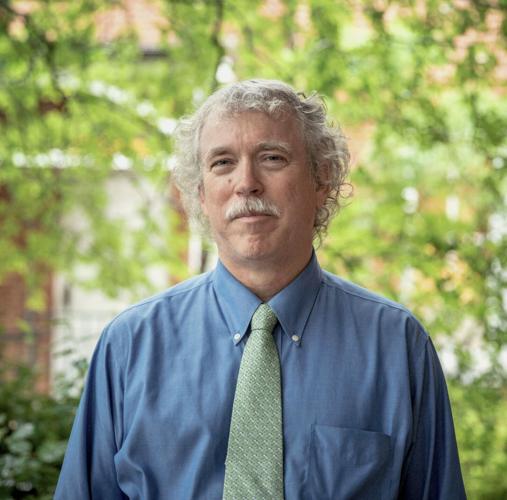
Namarato04.jpg.jpg (52242 bytes)

MICHAEL V. NAMORATO
Professor of History

Professor Namorato
Office hours: M, W 1:00-2:00 and 3:15-4:00pm and by appointment
Bishop 314
915-7488
hsmvn@olemiss.edu

Fall 2009

History 105 - American History Up to 1877


Course Content - A general survey of American history from colonial times to 1877, concentrating on the political, economic, and social aspects.

Required Texts - Davidson/DeLay, U.S.: A Narrative, I
S. Weisner/W. Hartford, American Portraits,
Volume 1
M. Namorato, Primus
Madaras/SoRelle, Taking Sides, volume 1
The Autobiography of Benjamin Franklin

Examinations
Each student will take the following examinations and attend
sections:
1. Mid-Term Examination -Sept. 30 - 30%
2. Final Examination - Week of Dec. 7-11 - 35%
3. Section Grade - 30%
4. Lecture Hall Quizzes -5%

***No make-up exams will be given for the semester exams unless the student has secured the instructor's permission.

Attendance - Any student who misses more than 3 lecture classes will automatically fail the course. Any student who misses more than 1 section class will automatically fail the course.

CPS Clickers - Each student is required to have a CPS clicker to be used for attendance and quizzes. It is the student's responsibility to make sure that the clicker is always working and that he/she has it with him/her for class. Anyone using a clicker that belongs to another student will automatically fail the class. You are to bring your clicker to every class period.
Lecture and Reading Assignments
1. Britain and the Colonies, 1660-1770
Reading - Davidson, chapters 1-5
Weisner, chapters 2, 4, 5
2. The American Revolution and the Articles of Confederation
Reading -Davidson, chapters 6 and 7
3. The Rise of the Early American Economy
4. Washington - War of 1812
Reading -Davidson, chapters 8 and 9
Weisner, chapter 7 and 9
5. Era of Good Feelings, 1816-1824
Reading -Davidson, chapter 9
6. Growth of the American Economy, 1820-1860
Reading -Davidson, chapter 10
Weisner, chapters 12, 15, 16
7. Sectionalism, 1828-1860
Reading -Davidson, chapters 11 and 12
8. Secession - Civil War
Reading -Davidson, chapter 13-16
Weisner, chapter 17,
9. Reconstruction - Compromise of 1877
Reading -Davidson, chapter 17

Rules of Etiquette

Given the nature of this course and the size of this class,
students will abide by the following rules:

1. No food or drink in class
2. No newspapers
3. No talking when instructor is lecturing
4. No gum chewing
5. No bathroom breaks
6. No shouting out in class
7. No use of iPods during the lectures
8. Absolutely no texting
9. No "whatever" the instructor has forgotten to list on
this syllabus

History 400 – History of the American Space Program, 1950s-2009
                From the beginnings of the Cold War to today, Americans have witnessed the technological miracles associated with space flight. In 1968, when Neil Armstrong landed on the moon, he said that it was a “small step for man, but a giant leap for mankind.”  What he may not have realized, however, was that he was commenting on what America and her enemies in the Soviet Union had been doing for quite a long time. The amount of time, effort and money expended on the moon landing and the intense rivalry between the United States and the Soviet Union were extraordinary to say the least. Yet, the moon landing and the U.S.-Soviet rivalry in space impacted not only the countries involved but the entire world. Space travel was not only a technological achievement, but it also represented an enormous expenditure of GDP on both sides, thereby significantly changing the world itself.
                This seminar will study the American space program from its early beginnings during and after World War II to today. It will examine the political, economic, diplomatic, and social aspects that this technological endeavor had on the American people then and now. And, it will emphasize that the space program was as much a political issue as it was an engineering feat.
                The class will study the American space program through a variety of readings as well as DVDs, including the most recent series, “When We Left Earth.” Students will  be expected to read weekly assignments, participate in group projects, and write a 20-25 page research paper on a topic approved by the instructor.  Readings will be assigned at the beginning of the seminar.