The University of Mississippi Department of Psychology

Bachelor's Degree Requirements for Psychology Majors

A total of 124 hours are required to graduate. Passing grades in all courses are required, as well as an overall GPA of 2.0 (C average).

Please note that requirements may change from year to year, and the student is responsible for following the requirements listed in the undergraduate catalog. The catalog may be obtained in Martindale Center.

The 124 required hours are made up of:

  1. Liberal Arts requirements (listed below)
  2. Psychology requirements (listed below)
  3. Requirements of your Minor (check with your Minor dep.)
  4. Elective courses

Forty-two of the 124 hours must be 300 level or higher.

Link to detailed course descriptions of Psy 405 and Psy 420.

Liberal Arts Requirements

  • English (12 hours)
    • 6 hours of Writing Composition. Writ 100 or 101 and Writ 102 or LIBA 102.
    • 6 hours of English Literature. English 221,222,223, 224, 225, or 226
  • History (6 hours)
    • It is recommended that this requirement be filled by either the 101 and 102 sequence (Western Civilization), or the 105 and 106 sequence (US history). If you decide to take 300 level courses to fulfill the History requirement, you must wait until your sophomore year (Freshmen are not permitted to enroll in 300 level courses).
  • Mathematics (3 hours)
    • Mathematics 115 (Elementary Statistics), 121 (College Algebra), 123 (Trigonometry), 125 (Basic Mathematics for science and engineering), 261, 262 (Unified Calculus and Analytic Geometry 1 and 2), 267 (Calculus for business, economics and accountancy).
  • Science (9-11 hours:3 lecture courses and 2 laboratory courses)
    • Courses offered by the departments of Physics and Astronomy, Biology, Chemistry, Biochemistry, or Geology. Two courses must be in same scientific discipline.
  • Language (6-12 hours including 6 hours at the 200 level or higher)
    • If you choose Spanish, and have had 2 or more years of high school language, take SPAN 121 as your introductory course. You will then move into the 201 and 202 sequence.
    • For all other languages, you may enter the four semester sequence (101,102,201,202) according to you high school experience.
    • Another alternative is to take the 111-211 sequence when offered. 111 and 211 are 6-hour courses which allow 12 hours of language to be completed in one year. Please note that 111-211 is an intact sequence (111 is the prerequisite for 211; if you begin with 111, you must move into 211).
  • Social Science (6 hours)
    • Your Psychology courses meet this requirement
  • Humanities (3 hours)
    • African-American studies; Classical Civilization; Gender Studies 103, 201, 301, 333; Philosophy; Religion; Southern Studies 101, 102; Environmental Studies (ENVS) 101.
  • Fine or Performing Arts (3 hours)
    • Art, Music, Theater arts. Recommended courses: Art History 101, 102; Music, 101, 102, 103, 104, 105; Dance 200; Theater 201. Studio and workshop courses do not apply.

Psychology Requirements

  • 30 hours of Psychology are required with a minimum Psychology GPA of 2.0.
  • The following courses are required:
    • Psy 201. General Psychology (3)
    • Psy 202. Elementary Statistics (3)
    • Three of the following courses:
      • Psy 309 Learning (3) (Psy 201 is prerequisite)
      • Psy 319 Brain Science & Behavior (3) (Psy 201, or BISC 102 or BISC 160 are prerequisites)
      • Psy 320 Cognitive Psy (3) (Psy 201 is prerequisite)
      • Psy 321 Social Psy (3) (Psy 201 is prerequisite)
    • One of the following Laboratory in Psychology courses (Psy 201 and 202 are prerequisites):
      • Psy 390 Behavioral Neuroscience (Additional prerequisite: Psy319 or 322)
      • Psy 392 Experimental Social Psychology (Additional prerequisite: Psy315, 321, 324, or 340)
      • Psy 394 Cognition and Perception (Additional prerequisite: Psy320 or 326)
      • Psy 396 Laboratory in Psychology (Additional prerequisite: Psy309)
  • Additional Psychology courses:
    • Courses that have Psy 201 as a prerequisite:
      • 301 Developmental Psychology (3)
      • 311 Abnormal Psychology (3)
      • 313 Experimental Analysis of Behavior (3)
      • 315 Personality (3)
      • 323 Applied Behavior Analysis (3)
      • 327 Psychology and Law (3)
      • 419 Psychology of Parenting (3)
    • Courses that have Psy 201 and Psy 202 as prerequisites:
      • 303 Intermediate Statistical Methods (3)
      • 308 Industrial Psychology (3)
      • 317 Tests and Measures (3)
    • Courses that have Psy 201, Psy 202 and a laboratory (Psy 390, 392, 394, 396) as prerequisites:
      • 460 Psychology of Human Sexuality (3)
    • Courses that have special prerequisites:
      • 100 Orientation to the major (1) (No prerequisites) Recommended for Fr./Soph. Psy majors
      • 203 Self management for your personal life (1) (No prerequisites)
      • 215 Psychology of Instructional Technology (3)*
      • 322 Drugs and Behavior (3) (9 hours of Psy or consent of Instructor)
      • 324 Science of Emotion (3) (9 hours of Psy or consent of Instructor)
      • 326 Sensation and Perception (3) (9 hours of Psy or consent of Instructor)
      • 340 Multicultural Psychology (3) (Psy 201 or consent of Instructor)
      • 401 Undergraduate Internship (1-3)*
      • 405 Minor Research Problems (3)*
      • 410 Health Psychology (3) (9 hours of Psy or consent of Instructor)
      • 415 Introduction to Clinical Psy (3) (9 hours of Psy or consent of Instructor)
      • 420 Special Topics (3)*
      • 451 History and Systems (3) (12 hours of Psychology)
      • *Permission of Instructor also required
    • Juniors and Seniors may take 500 level courses for undergraduate credit

Psy 405 (Minor Research Problems) and Psy 420 (Special Topics)

Students interested in gaining research experience beyond their laboratory class can register for Psy 405 or Psy 420. These courses are not listed in the class schedule each semester. Psy 405 is taken for a Z grade, and Psy 420 is taken for a letter grade. Scheduling of your time for these courses is on an individual basis; it depends on the faculty members' research schedules (see below) and the nature of the project.

Prerequisites for 405: permission of instructor.

Prerequisites for 420: permission of instructor.

Steps taken to enroll in Psy 405 or Psy 420.

  1. Identify a research area or faculty member you would like to work with (see descriptions below).
  2. Determine whether you have met the prerequisites (see above, and individual faculty descriptions below).
  3. Contact the specific faculty member to learn more about the research experience, and obtain permission to register. If you don't know their office hours, inquire in room 207.
  4. Go to the Psychology Undergraduate office (Room 207) and obtain a form for the faculty member to sign.
  5. Return the signed form to the Undergraduate Office.
  6. You are now ready to register.

Course and research descriptions for individual faculty members who supervise students in Psy 405 and Psy 420:

Dr. Michael Allen, Psychophysiology.

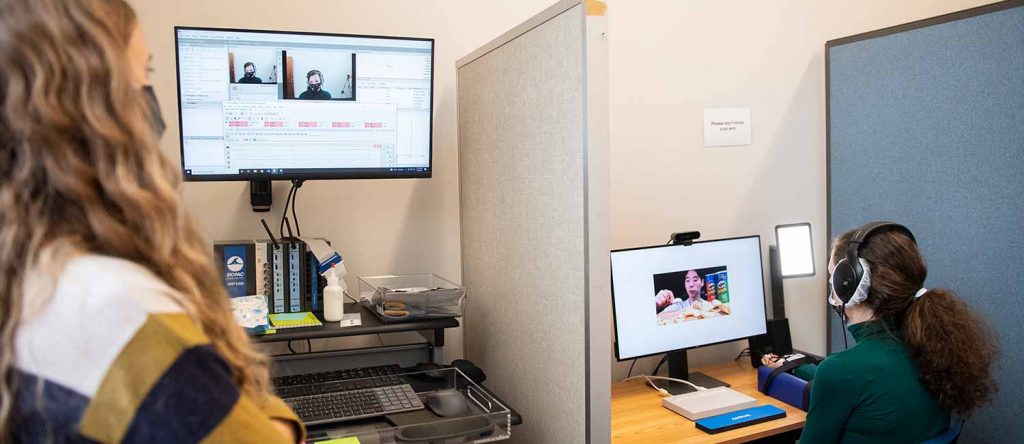
Dr. Allen's areas of research are cardiovascular psychophysiology and cardiovascular behavioral medicine. He is currently working on a project that is examining the relationships of behavioral characteristics such as impulsivity and anxiety with measures of autonomic nervous system activity such as heart rate variability. Work in his lab would entail attending laboratory meetings, learning how to use psychophysiological equipment, and assisting in running studies. It is preferable that the student have completed PSY 202 and one of the laboratory classes in psychology.

Dr. Beth Boerger, Developmental Psychology, boerger@olemiss.edu Room 310 C Peabody.
Research Areas: How development in children's understanding of others' thoughts and emotions affects their social behavior. Students will be trained to administer several standardized interviews with 8 - 13 year olds and will conduct interviews in schools and after school programs. Work in this lab requires weekly attendance at a 1 hour lab meeting, plus 6-8 hours of work on research activities, including (among other things) training/practice of interviews, conducting interviews, and travel to and from interviews. We will be conducting interviews in Oxford, Batesville and Water Valley. Therefore, students must be able to devote at least 2 3-hour blocks of time or 3 2-hour blocks of time each week (Mon. - Fri.). Dr. Boerger will be accepting 15 - 20 students for Spring, 2012. Pre-requisites include Psy 301 with a grade of B or better.

Dr. Karen Christoff, Clinical Psychology.
Dr. Christoff's areas of interest are in children's social skills and friendships, and the factors that influence these. Projects of the last several years include an investigation of what influences, and what is related to, fifth-grade children's assessment of the smartness of their peers; assessment of the relationship of loneliness and other social factors to whether or not Freshman college students return to campus for their sophomore year; an investigation of the relationship of preschool children's activity levels and food choices to their parents' activity levels and knowledge about nutrition.


Dr. Alan M. Gross.
Students interested in working on ongoing research projects may inquire about the availability of opportunities to work with Dr. Gross, or a graduate student who is conducting research. Current projects involve:
1. Alcohol expectancies and sexual coercion
2. Emotional regulation and aggressive behavior in children
3. Contextual variables in Date rape


Dr. Marilyn Mendolia, Social Psychology.
Dr. Mendolia (Office-Peabody 302 A) accepts from 3 to 5 students each Fall and Spring Semester to work on special research projects. Each student works for approximately 10 hours per week in the laboratory.
Dr. Mendolia's research is in the area of emotion. Students attend weekly laboratory meetings and contribute to a specific research project.Other laboratory responsibilities may include data entry (e.g., coding and entering data using a computer), minor statistical analyses, and discussion of various research articles.


Dr. Nick Prins, Cognitive Psychology.

Dr. Prins studies visual perception. Most of your time in PSY 405 will be spent acting as a participant in research on low-level visual processes. Testing is self-paced and typically not very demanding. Scheduling of hours (about 4 hrs/week) is very flexible as you will learn how to get the experiment up and running yourself after which you can test without supervision. During meetings the background, purpose and results of the research will be discussed. Requirements are that you are reliable (i.e., show up for the times that you have signed up for) and take the testing seriously.


Dr. Matt Reysen, Cognitive Psychology.
Students interested in working on research projects involving: False memory, social influences on memory performance, and other basic memory phenomena, are invited to inquire about the availability of opportunities to work on these and other related projects.


Dr. Karen Sabol, Behavioral Neuroscience.
Student participation in Psy 405 and Psy 420 involves coming to the laboratory 6-8 hours/week to test rats in one of the ongoing experiments. Scheduling each semester depends on the needs of the experiment, and students' individual schedules. Students learn how to handle rats, conduct the experimental procedure, read scientific articles relevant to the experiment, analyze and interpret data. Students are asked to attend weekly lab meetings at which the status of different research projects is discussed; students are asked to present a scientific article to the research group at one of the lab meetings. A term paper is required for Psy 420.

Research in Dr. Sabol's laboratory focuses on the effects of the abused drug, methamphetamine in the rat. She is interested in knowing whether rats treated with methamphetamine as young adults will have difficulty with attention, learning, and memory when they reach middle or old age. A second area of focus is the development of tolerance to methamphetamine's effects on learned tasks (reaction time) and body temperature.

Prerequisites: Permission of Instructor; an A or B in 322 (Drugs and Behavior), or 390 (Behavioral Neuroscience Lab), or Psy 319 (Brain and Behavior).


Dr. Stefan E. Schulenberg, Clinical Training Program.
Research Program
Dr. Schulenberg's research interests include meaning/purpose in life, positive psychology, clinical/disaster psychology, psychological assessment, serious mental illness, and adolescent psychopathology in the legal context. He was a mental health consultant on a National Science Foundation research grant issued in response to Hurricane Katrina, and currently conducts evaluation research funded by the Mississippi Department of Mental Health relating to the effects of the Gulf Oil Spill.

Expectations
Students are expected to attend weekly lab meetings (1 to 2 hours per week) and to put in an additional 6 hours in the laboratory (e.g., collecting data, entering/double-checking data, pulling articles, conducting literature searches, reading/discussing articles).

Dr. Schulenberg's research team co-organizes Out of the Darkness walks with the American Foundation for Suicide Prevention, which presents opportunities for student participation in the community.

Prerequisites
An overall GPA of 3.25 or higher.
Consent of instructor.
PSY 317 (Tests and Measurements) is recommended.

Dr. Carrie Smith, Social Psychology
Dr. Smith is interested in studying how people's conceptualizations of themselves and their motivations affect their interpersonal experiences (e.g., satisfaction, behaviors). For example, do people who have more interpersonal reasons for having sex have interactions that are more satisfying than people who have more self-focused motivations. She is also interested in examining people's perceptions of their daily social experiences. More specifically, she focuses primarily on how various situational factors and individual differences affect the way people navigate their daily social lives - who are we friends with? What are social interactions like?
Working in Dr. Smith's lab involves meeting approximately twice a week and being available to run studies (including evenings and weekends). Students will be exposed to all aspects of the research process, from idea generation to measure selection, data collection to data analysis. Dr. Smith has approximately 3-5 students in her lab each semester. Summer positions are also available.
Students interested in working with Dr. Smith must have taken both Psy 201 and 202, earning a B in each course. In addition, students must have taken or currently be enrolled in Psy 392 or 394. Students must have permission from Dr. Smith before enrolling in either 405 or 420.

Dr. Todd A. Smitherman, Clinical Psychology
Dr. Smitherman's research focuses on clinical health psychology. In particular, he is interested in the psychological factors that affect migraine headaches and other pain conditions. His research focuses on the roles of depression, anxiety, sleep disorders, and substance use in migraine pain and disability. He is also interested in identifying optimal strategies for treating headache patients who also have psychiatric disorders, as well as in behavioral approaches for managing migraine. As such, his interests lie in traditional clinical psychology as well as health psychology. Work in his lab would entail attending laboratory meetings, learning how to administepsychological interviews and surveys, data entry, and assisting irunning studies. There are opportunities to be a co-author oconference presentations and/or journal publications. It is preferabl (but not required) that the student has completed PSY 202 and maintains an A or B average in psychology courses.
.
Dr. Tracie Stewart, Social Psychology
Undergraduate and graduate students in Dr. Stewart's lab work together to study the social psychology of intergroup relations. Specific current research topics include developing and assessing strategies to reduce automatic racial and gender stereotyping; furthering understanding of how stereotypes are perpetuated; and examining individual differences in bias processes.

Undergraduate students in Dr. Stewart's lab will be expected to contribute 9 hours per week in the lab (e.g., conducting experimental sessions, developing experimental materials, conducting literature searches, reading research articles relevant to research projects in the lab) and, in addition, to attend monthly one-hour lab meetings.

Prerequisites for participation in the lab include completion of Psy 201 and Psy 321 with a grade of B or higher


Dr. Ken Sufka, Behavioral Neuroscience.
Dr. Sufka's research is in the development, validation and utilization of animal simulations of clinical syndromes focusing mainly on stress, anxiety and depression models and chronic pain and analgesia models. The commitment is approximately 6-9 hours per week including weekends. Students acquire knowledge and skills in animal care, handling and testing, drug preparation and injections, brain extractions and dissections, experimental design, statistical analyses, data presentation, etc. Prerequisites include outstanding grades in Brain and Behavior or Drugs and Behavior. Students must also meet compliance with University and Federal requirements for working with research animals

.

COURSE DESCRIPTIONS

  • If you would like to download information about Psychology courses from the Undergraduate Catalog select the link below.
  • You will need a reader such as Adobe Acrobat installed on you computer.
  • If you would like more information than is listed in the undergraduate catalog, contact the faculty member teaching the course.
  • The UM undergraduate catalog link.