In Memoriam
Evans Harrington
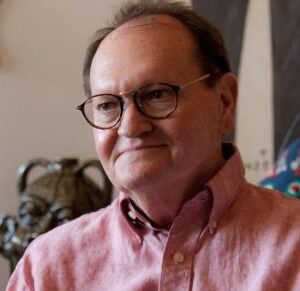
Evans Burnham Harrington died in Oxford on December 1, 1997, after battling courageously with cancer for several months. He will be missed by family, friends, colleagues, students, and an endless list of persons whose lives he enriched during his 72 years. Harrington grew up in Mississippi, living in several towns where his father was a Baptist minister and, no matter where the family lived, vying with his mother for each issue of the Saturday Evening Post. "My mother was a great reader, and she and I would hide the Post from each other until we had read all the fiction," he said. "I loved to read so much and decided I would like to write stories like those I read. I think it was that simple."
After completing his B.A. at Mississippi College in 1948, Harrington was a high school teacher, first in Decatur and then in Oxford. In 1955 he became an instructor at the University of Mississippi, where he later earned M.A. and Ph.D. degrees and was promoted to professorial rank in 1962. He chaired the English Department from 1978 until 1987.
A beloved teacher of literature and creative writing, Harrington drew on his own experiences as a dedicated reader and as an accomplished author. Among his publications are The Prisoners, three other novels, numerous short stories, and many essays. His story "The Knife in the Dark" was adapted for television by Rod Serling in the 1950s, with actor Paul Newman taking the leading role. Also, he wrote the script for Faulkner's Mississippi: Land into Legend, a documentary film, and the book and lyrics for two musical comedies.
In addition to teaching courses and nurturing creative writers, Harrington
organized a number of outstanding programs featuring writers and their
work. A leader in the Southern Literary Festival for more than 30 years,
he contributed to many annual meetings and planned memorable programs for
sessions held at the University during his three terms as president. In
1965 he organized a three-day meeting during which authors Eudora Welty
and Robert Penn Warren, critic Malcolm Cowley, actress Ruth Ford, and photographer
Martin Dain gathered to pay tribute to William Faulkner. Festival president
again in 1976 and 1987, Harrington organized addresses and readings by
such writers as Robert Canzoneri, Beverly Lowry, Willie Morris, William
Styron, and Sterling Plumpp.
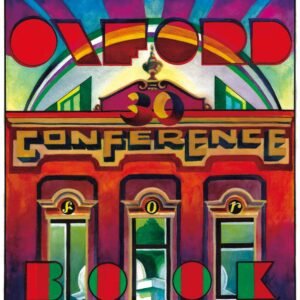
Two participants in the 1965 Southern Literary Festival--Eudora Welty and Ruth Ford--returned to Oxford in 1987 for the University's Faulkner and Yoknapatawpha Conference, an annual six-day event Harrington helped organized in 1974 and directed for the next 20 years. While orchestrating lectures, discussions, readings, tours, and other activities, Harrington selected and arranged passages from Faulkner's work for dramatic readings called Voices from Yoknapatawpha, with various versions presented at the annual conference. For the 1976 meeting he wrote the book and lyrics for The Battle of Harrykin Creek, a musical comedy based on a Faulkner short story.
Richard Howorth, one of his former students and now proprietor of Square Books in Oxford, said he will always remember how Harrington "brought literature to life. He was just a tremendous teacher. Because of what he did here and the people he brought to the University, specifically Barry Hannah, the University has a reputation for a writing program that's known across the nation."
Harrington's broad intellectual and academic interests were evidenced by his serving as an enthusiastic member of the planning committee for the Center for the Study of Southern Culture, and he remained one of its strongest advocates. In addition to planning and speaking for the Center and serving on the search committee for its first director, he for many years was one of six instructors for the popular team-taught course Introduction to Southern Studies.
Harrington was, as Jim Dees wrote in the Oxford Eagle, "one of the true trailblazers on Oxford's path to literary eminence." But his interests were not exclusively literary or academic. Dees notes that Harrington was also, along with his wife, Betty, a long-time supporter of freedom of speech causes such as those championed by the ACLU and Common Cause. He attributed some of his political convictions to the Meredith crisis at the University in 1962. "That night when I saw the Mississippi Highway Patrol inciting people to throw rocks at Meredith was the night I became an activist," Harrington said.
All who knew Evans Harrington would no doubt agree with Barry Hannah, who said "I don't know of a better reader, literary man, and uncommon gentleman." All who knew him will continue to miss him and to rejoice in his memory. Memorial contributions to the Evans Harrington Creative Writing Scholarship Fund, which provides an annual award of $1,000 to promising young writers in poetry and fiction, may be sent to the University of Mississippi Foundation, P.O. Box 249, University, MS 38677.